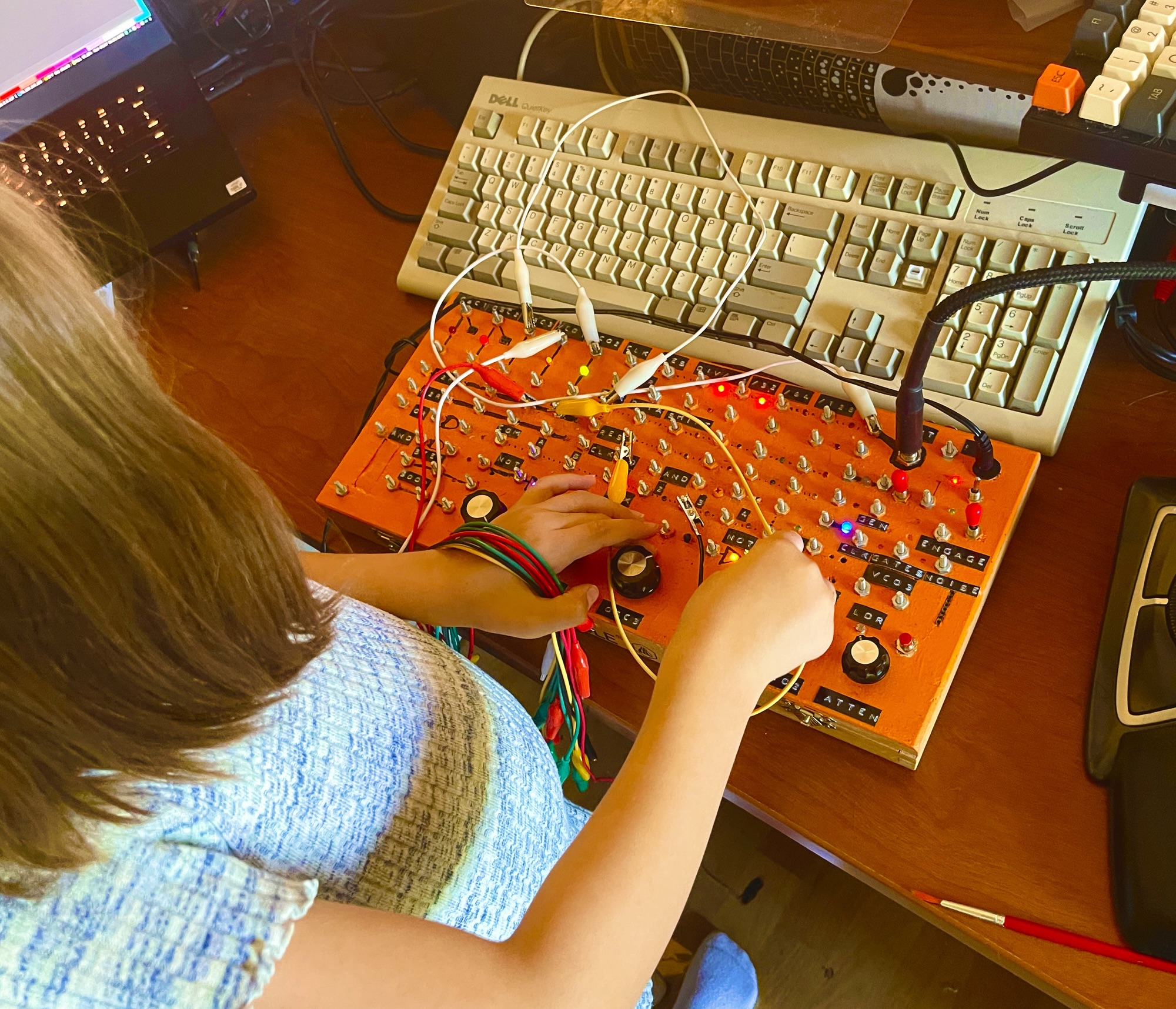
aka “Interstellar Boolean Logic Exploration Device (IB-LED)”
TL;DR? It’s an analog modular logic synthesizer built in a wooden knife box. It is a “logic synth” because everything is based on boolean logic. There are no filters, no envelope generators, and all the oscillators are square waves
In other words, even though it’s a 100% analog device, it is completely digital in the sense that there is only “off” and “on.” Listening to “offs” and “ons” fast enough is perceived by our brains as tones.
There are 7 knobs which control the frequency of the 6 oscillators and the level of an attenuator. My goal was a synth with as few knobs as possible, where the sound creation would happen primarily with the patching. Speaking of patching, as with my big modular I used machine screws and connect them together with alligator clips. Another requirement was as many LEDs as possible. I love the blinkenlights.
A few years after I built my big modular synth I had the idea to build a new, more portable one. One day I found a knife box at a thrift store. I thought it would make a great case for a tabletop synthesizer. I got my drill, some paint, and started building.
here’s what it sounds like
more details
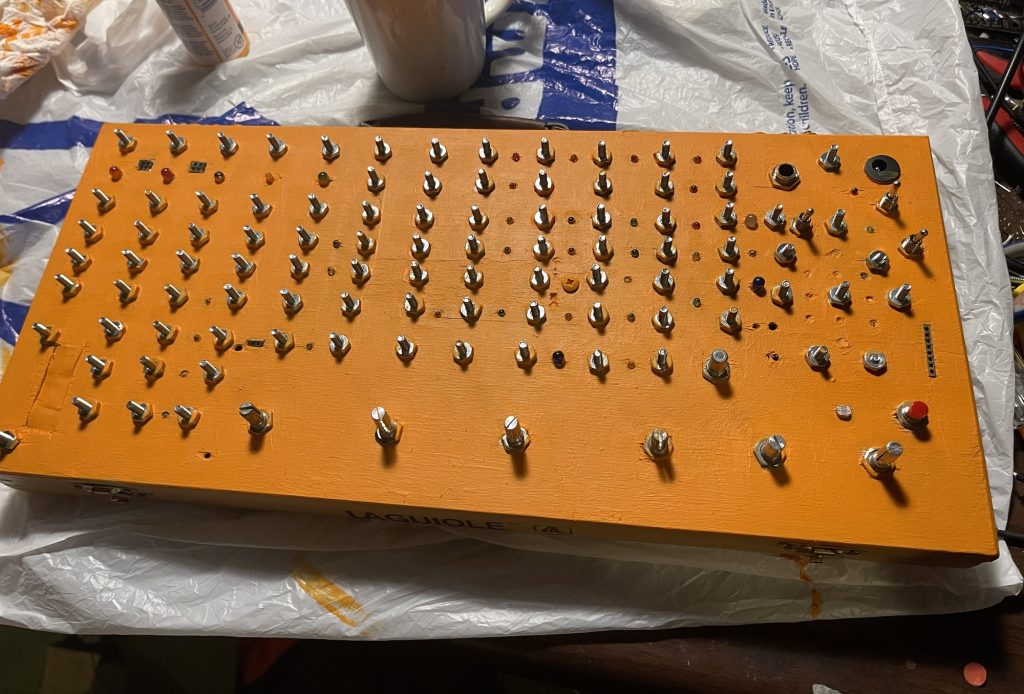
I’ve heard many times that making the user interface first and building the electronics second is the way to go. I tried that method this time and it worked well. After building my first modular – and learning a ton – I had a good idea what I wanted to do with this one.
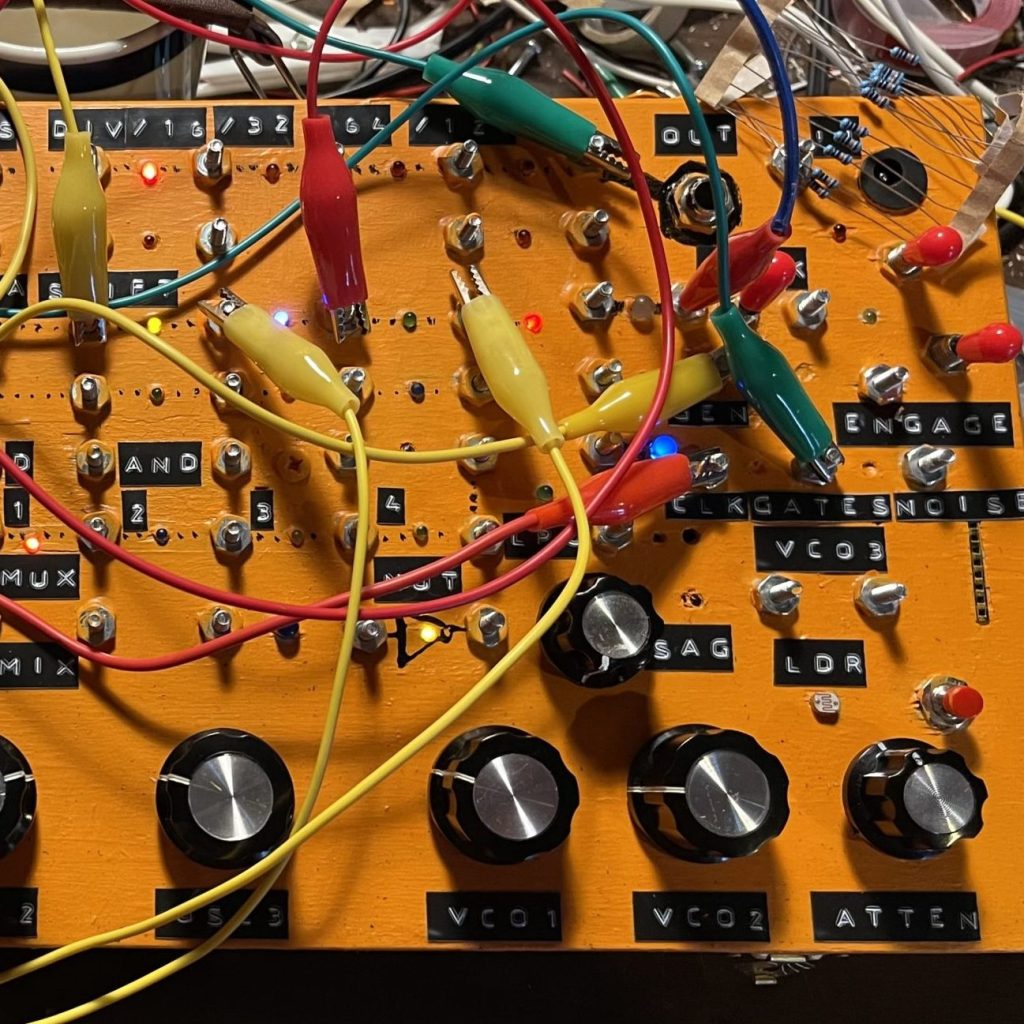
Most synthesizers have many more knobs. As I mentioned above, I wanted as few as possible. All the sound is generated by the 6 oscillators in the upper left-hand corner of the box. Patching these oscillators into each other and into other modules is what builds the sound.
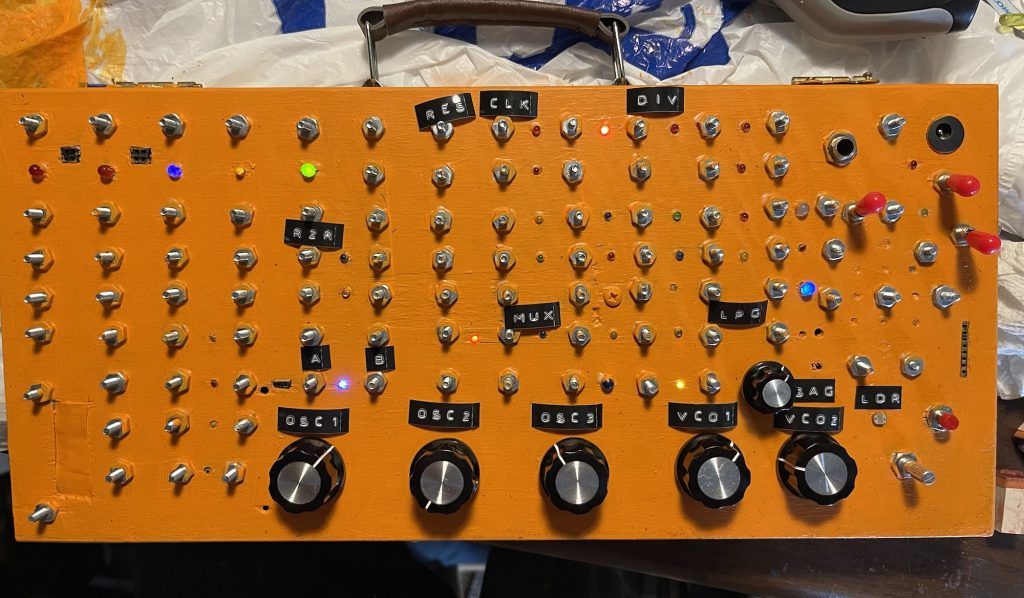
Once labeled it was much easier to use. I went with the classic DIY aesthetic of those black tape strips with uppercase white letters on them. I love those.
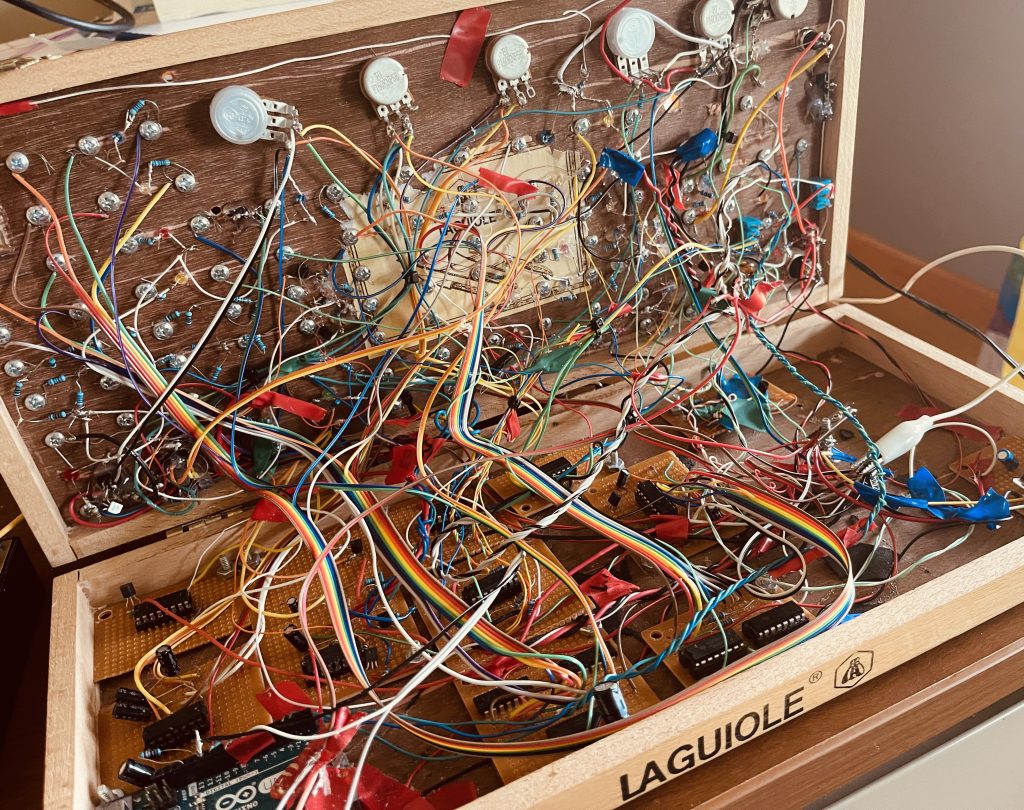
I’m aware the next image might be shocking. If this offends you please feel free to look away. I’m 100% self-taught in electronics and it shows. It’s the physical version of “spaghetti code.”
Don’t worry about it. The synth works great and only releases a little smoke occasionally. My next synth might be more organized.
in the studio
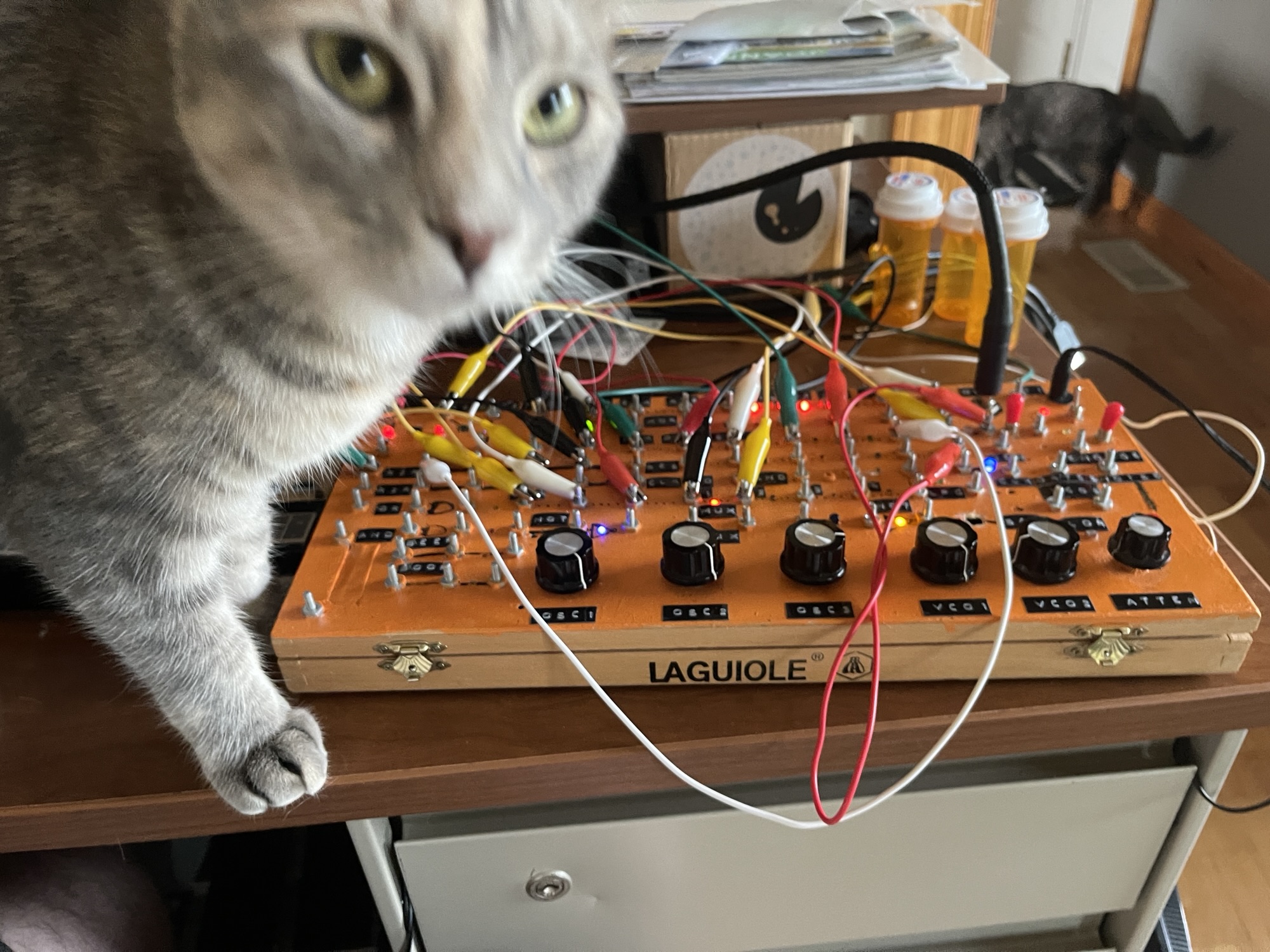
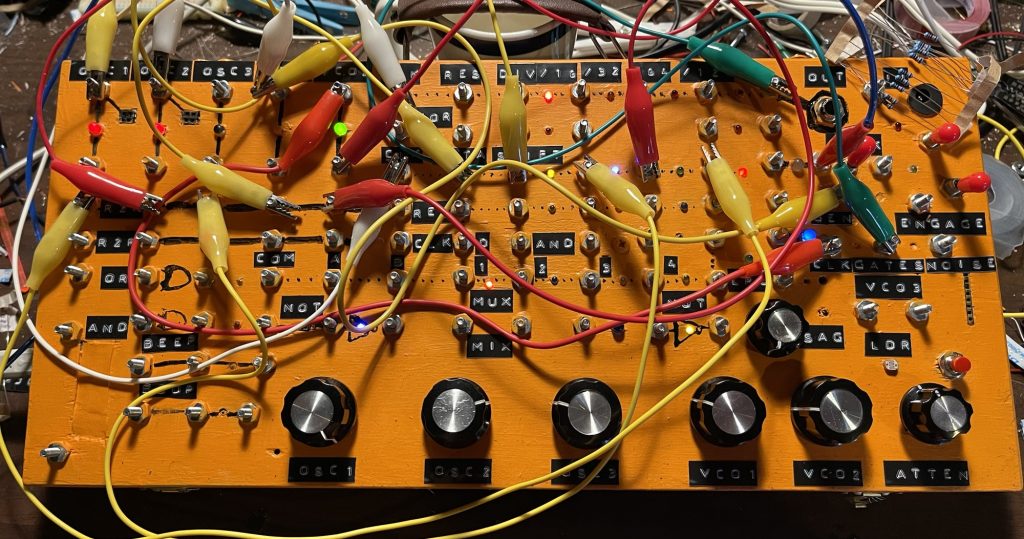
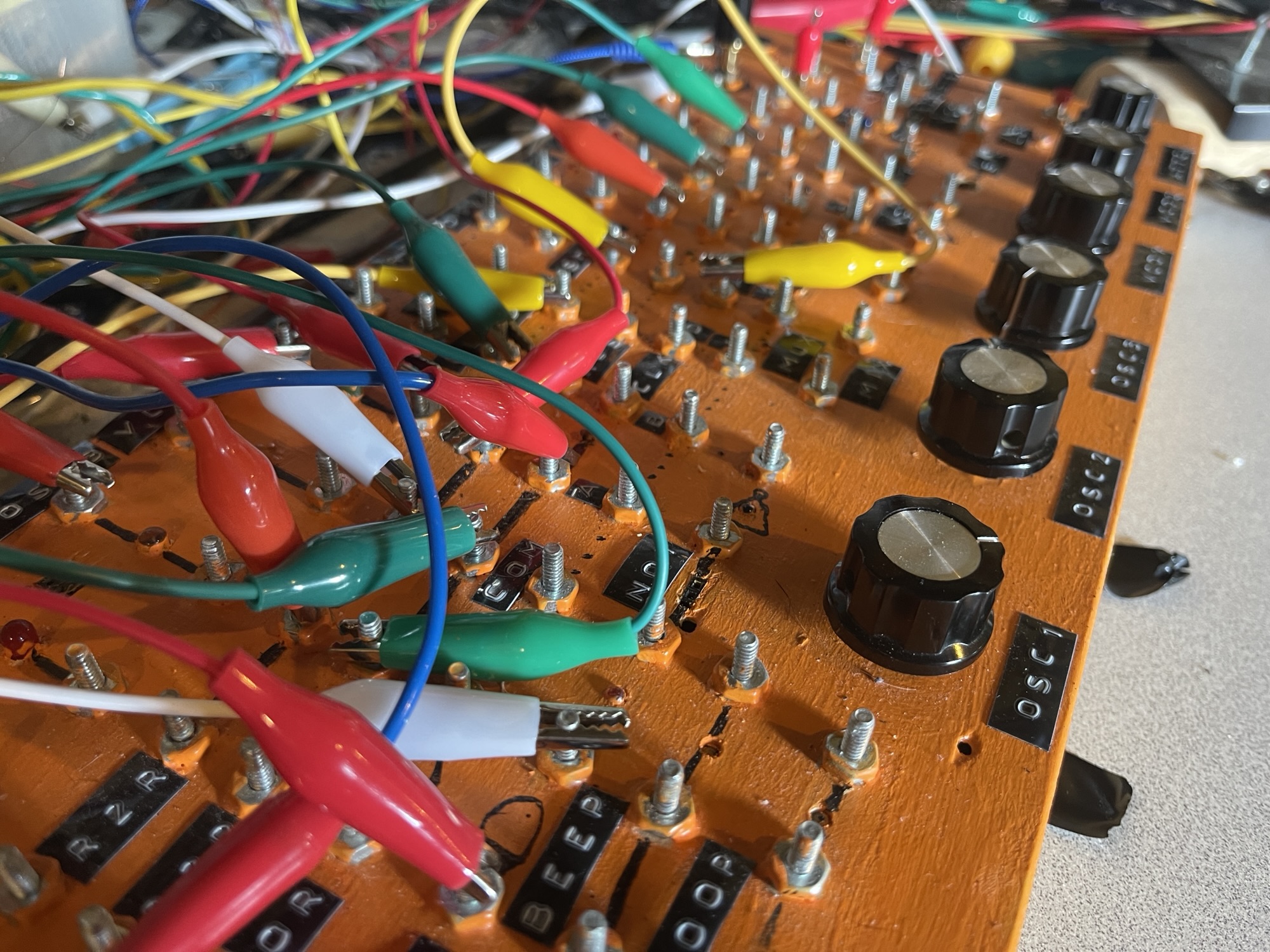
When the lid is closed and it’s all patched up it looks more like a “regular” modular synthesizer. It can be difficult to track connections due to the small distance between screws. This is not so different from small Eurorack modules. One bonus for having all the knobs in one row at the bottom is that they are always easy to access. There is no struggling to fit your hand through a mess of cables to turn a knob.
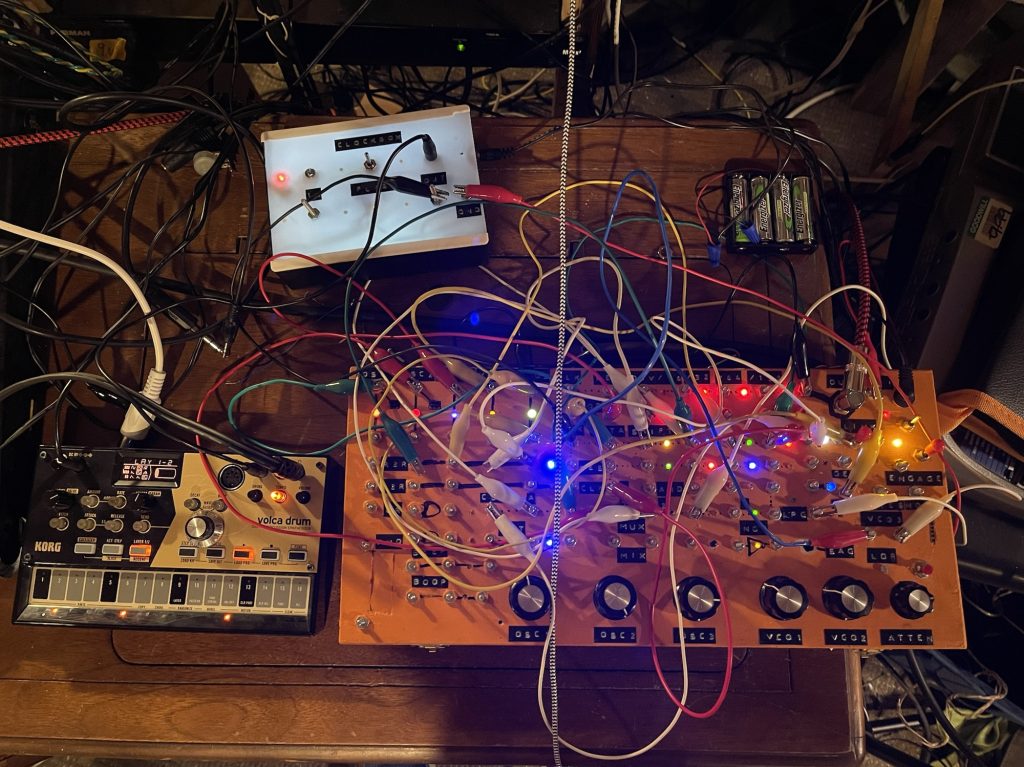
Because it’s analog it can easily accept any sort of square wave/clock/click/sound that is loud enough and use that to trigger various modules. I built a “clock box” that takes in sounds/voltages, cleans them up, and spits out a really nice clock source. The Korg Volca series all have “sync” outputs, and I can plug those into the orange synth to get them synced up that way too. It’s rad.
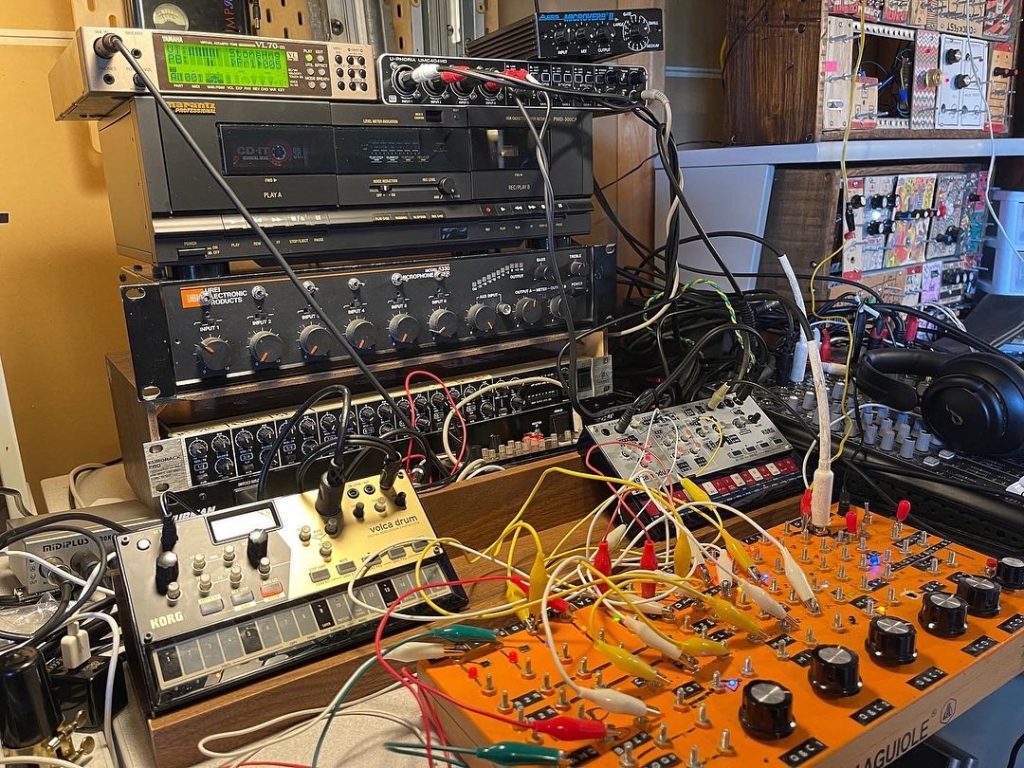
There are no filters which means the sound can sometimes be very bright or even grating. Hooking it up to the Volca Modular and using its modules can help tame the sound a bit. It can also go the other way, where MIDI can trigger notes on the Volca, and those notes can be sent to the orange synth. The beauty of modular design. Plug anything into anything.
It integrates nicely into my studio, and other creatures in my house like it as well.